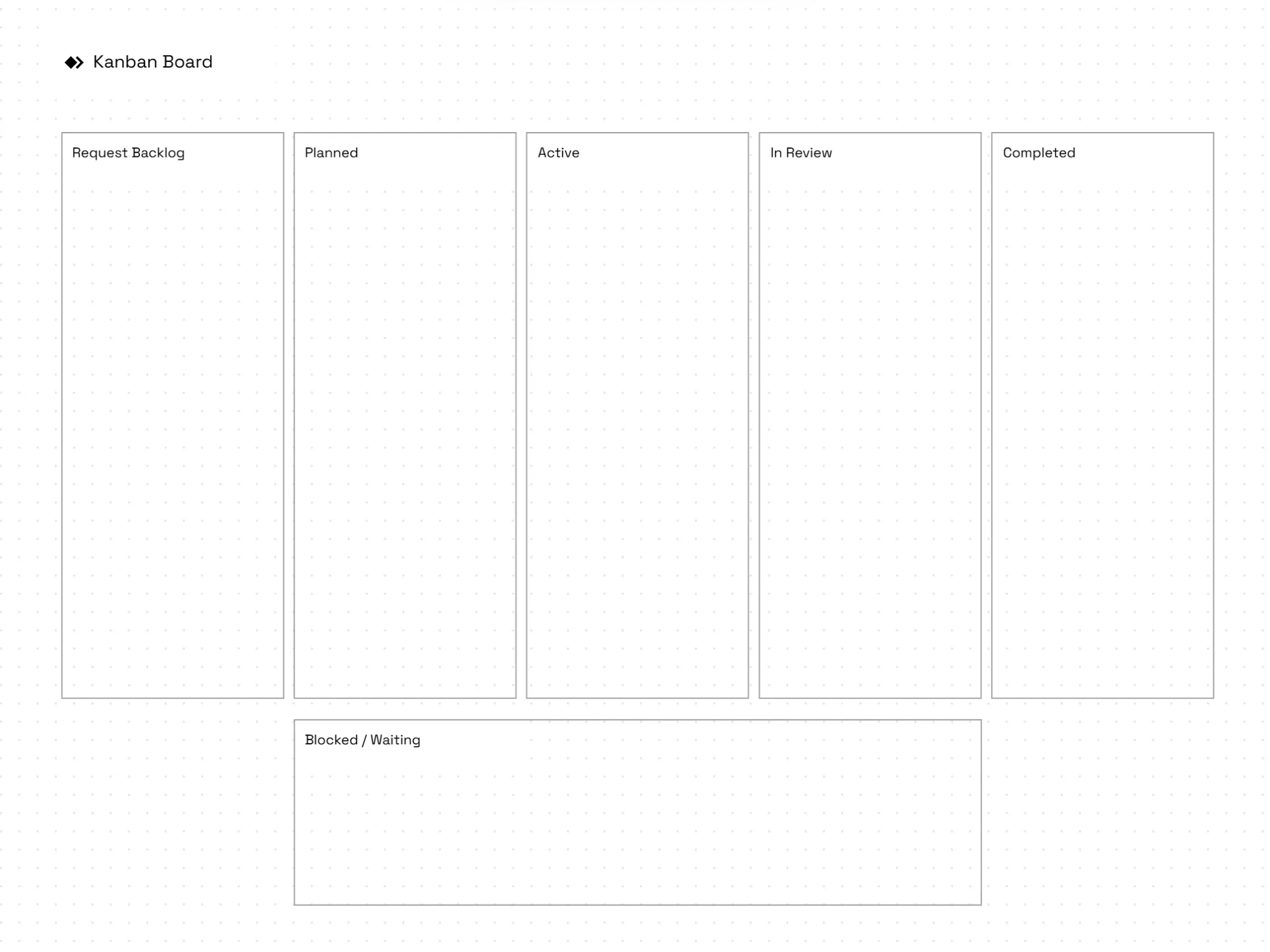
A Kanban Board visualizes work as cards moving across columns that represent stages of a workflow, typically To Do, In Progress, and Done. Teams can add stages that fit their process, such as Research, Synthesis, Review, and Published. Each card represents a task or deliverable, often with an owner, due date, and status.
Originating in Toyota's lean manufacturing system and later adopted by software and knowledge teams, Kanban emphasizes visible work, limits on work in progress, and continuous flow. Limiting how many items sit in each stage at once exposes bottlenecks and helps teams finish work before starting more.
Use it to manage research projects, insight requests, foresight programs, follow-up actions, or any recurring workflow with multiple contributors. It is especially useful for turning the outputs of strategy and foresight work into tracked actions with clear ownership.
Teams choose it because it is simple, flexible, and transparent. Everyone can see what is in progress, what is blocked, and what is complete, without status meetings. Within an insights platform, it closes the loop between analysis and execution, ensuring that actions identified during strategy, foresight, or synthesis work actually get done.