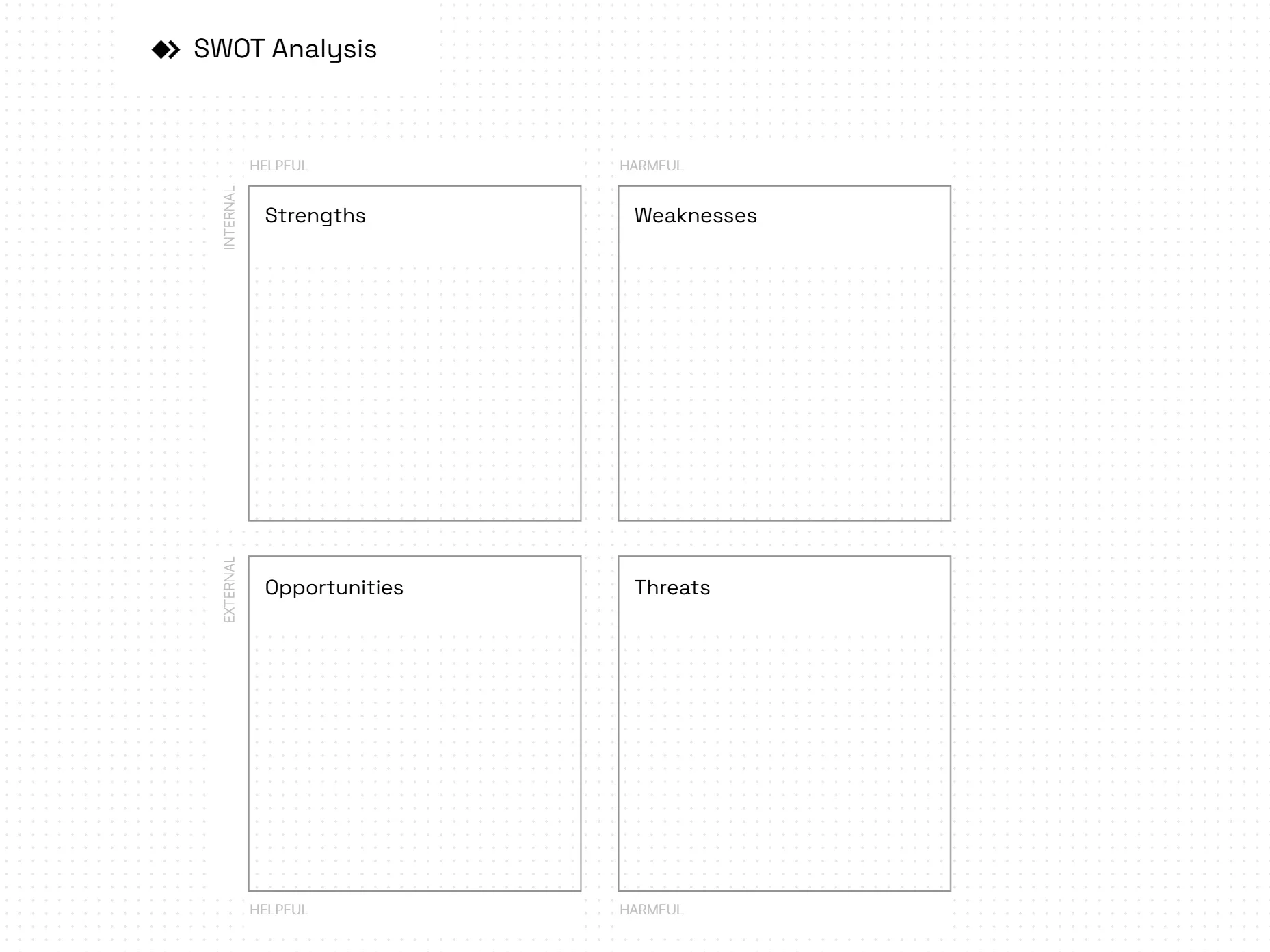
SWOT Analysis summarizes a strategic position in four quadrants: Strengths and Weaknesses, which are internal, and Opportunities and Threats, which are external. Teams can apply it to a whole company, a business unit, a product, a brand, or a specific initiative.
It is one of the most widely used frameworks in business. Teams use it to consolidate research into a single view, combining what they know about their own capabilities with what scanning and market analysis reveal about the outside world.
Use it at the start of strategic planning, before a major decision, during a competitive review, or when briefing leaders who need a concise picture of where the business stands. It is most useful when the external quadrants draw on structured inputs, such as an environmental scan or an industry analysis, rather than opinion alone.
Teams rely on it because it is fast, intuitive, and universally understood. Its real value comes from the next step: pairing quadrants to generate options, such as using strengths to pursue opportunities or addressing weaknesses that leave the business exposed to threats. Done well, it turns a large body of research into a clear starting point for strategy.