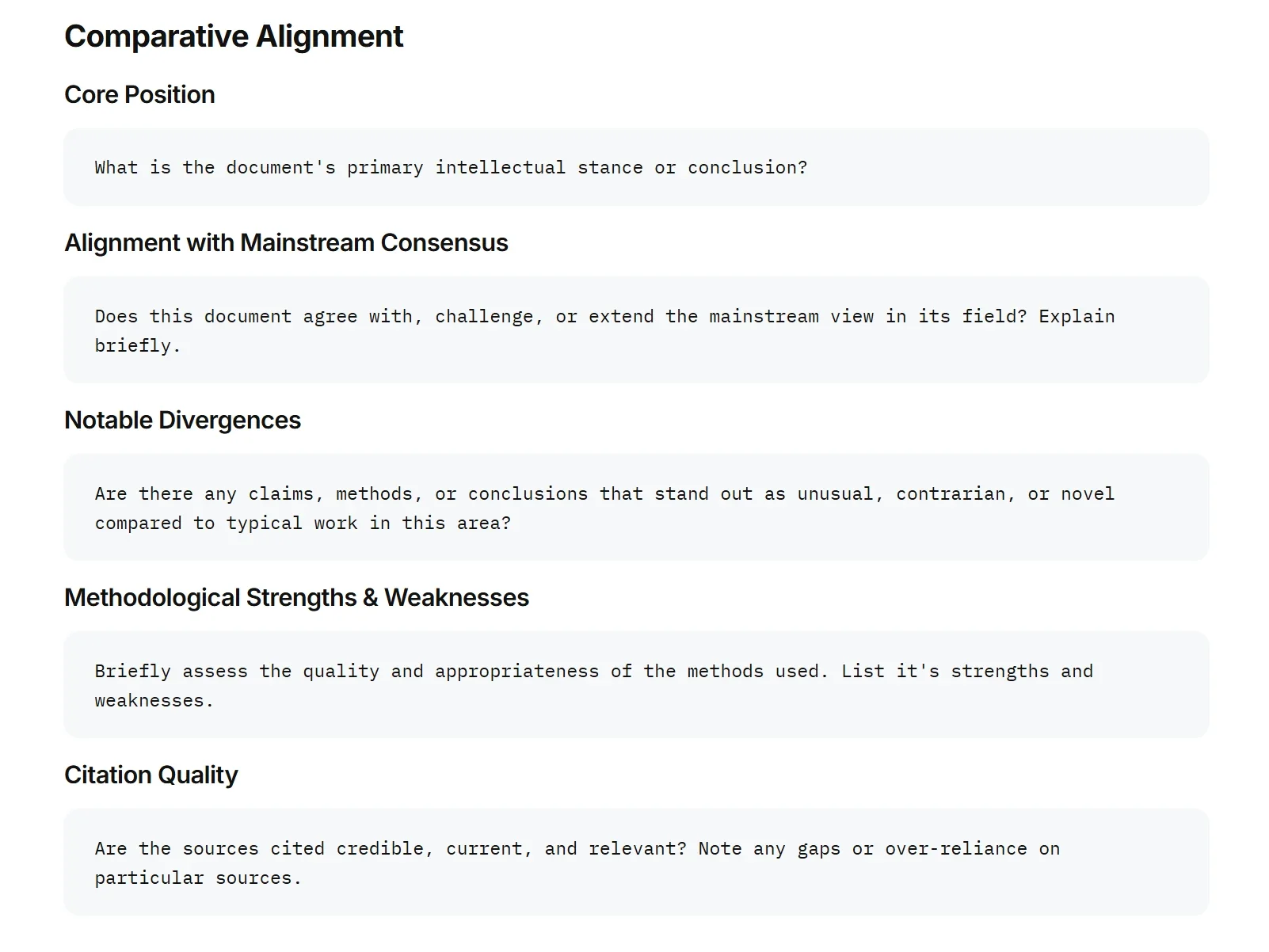
Comparative Alignment assesses how a document relates to the wider body of research on its topic. The AI Assistant identifies the document's core position, judges whether it agrees with, challenges, or extends the mainstream view in its field, highlights claims or methods that are unusual or novel, weighs methodological strengths and weaknesses, and reviews whether the sources cited are credible, current, and relevant.
It answers a question a document cannot answer about itself: is this the consensus view, an incremental addition, or an outlier? That context changes how much weight a finding should carry and how it should be communicated.
Use it when a document makes a strong or surprising claim, when a team is new to a field and needs to calibrate what is mainstream, or when assembling a literature review that shows the range of positions. It is also helpful for assessing consultancy or think-tank reports that may present a particular view as settled.
Teams use it because a single source rarely tells the full story. Knowing where a document sits relative to the consensus helps teams avoid overreacting to outliers, recognize genuinely new thinking, and present findings to stakeholders with the right level of confidence.