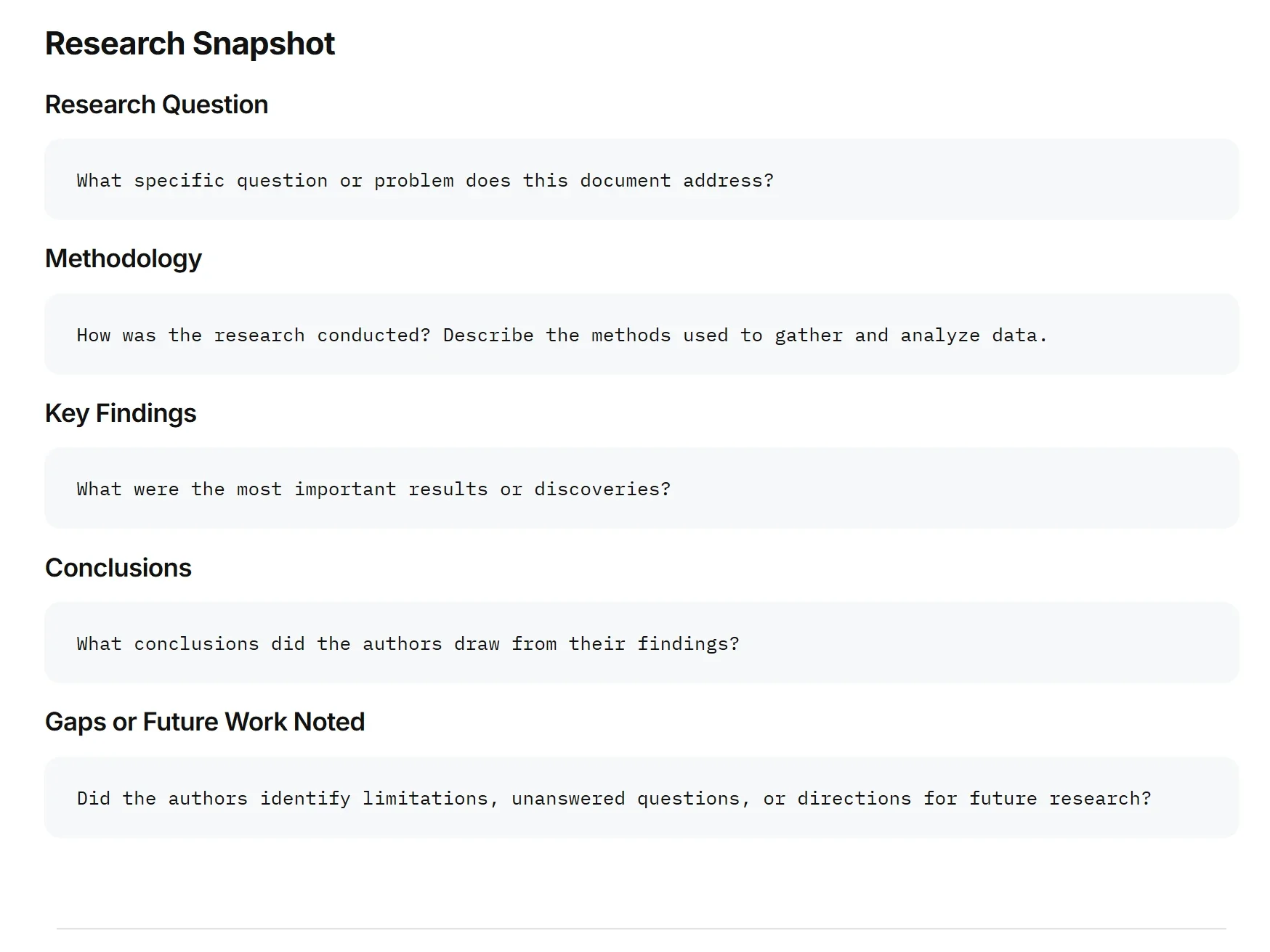
Research Snapshot extracts the structure of a research document into five short sections: the research question it addresses, the methodology used to gather and analyze data, the key findings, the conclusions the authors draw, and any gaps, limitations, or directions for future work they identify. Each section is limited to two or three sentences.
It mirrors the logic of a well-designed study, which makes it easy to see not just what a document found but how it got there. Separating findings from conclusions is particularly useful, because it shows where the authors move from evidence to interpretation.
Use it when a team needs more than a headline but less than a full read: preparing for a meeting with a research partner, assessing a study's relevance to a project, or building consistent notes across many papers on the same topic. It works best with empirical research, evaluations, and structured reports.
Teams use it because it creates comparable, decision-ready notes from documents that are often long and inconsistently written. A set of snapshots can be scanned side by side, so patterns in methods, findings, and open questions become visible across a whole body of research without rereading the originals.